Sheridan College
Architectural Technology
ARCH29969 - Architectural Studio 3
MODULE 16: ROOF ASSEMBLIES
MODULE 16: ROOF ASSEMBLIES
Roofing can be categorized as being either Low-Slope or Steep Roof.
Other roofing categories include those considered to be sustainable or Green or Cool, as well as those having integrated Photovoltaic Systems.
A low-slope roof (often referred to as a flat roof), is one that has a slope less than 2:12 or 17 percent, made up of multiple components. The roof deck is the structural surface that supports the roof. Thermal insulation is installed to slow the passage of heat into and out of the building. An air barrier restricts the leakage of air through the roof assembly, and a vapor retarder used in climates such as ours, prevents moisture vapor from condensing within it. The roof membrane is the impervious sheet of material that keeps water out of the building. Additional layers within the assembly may be added to increase fire resistance, protect soft insulation boards from foot traffic damage (ie. by mech. equipment service technicians).
Drainage components such as roof drains, scuppers, gutters and downspouts are integrated to remove any water that runs off the membrane. Special flashings and details must be designed to prevent water leakage from penetrations by pipes, vents, expansion joints, electrical conduits, skylights, or roof hatches.
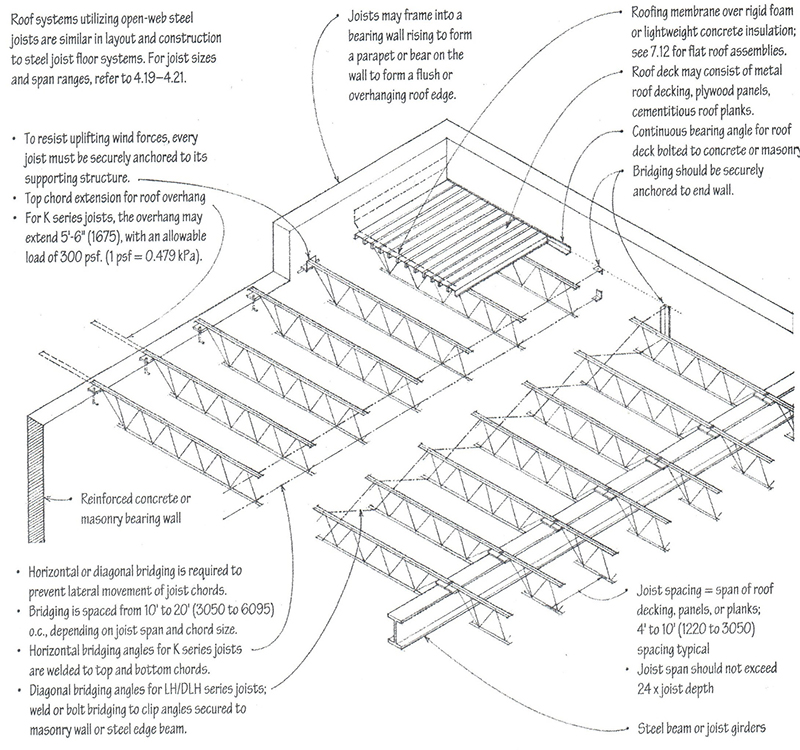
Roof Decks: Most common forms of decking on commercial/industrial buildings include corrugated steel decking, site cast (cast-in-place) concrete slab, and precast concrete slabs. The deck itself or the insulation materials on top of it must slope steeply enough towards the drainage points for effective water flow off of the membrane: ¼” per 1’-0” of run (1 in 48) or 2 percent minimum. This may be achieved by sloping the structural steel supporting the metal deck or by installing varying thicknesses of thermal insulation – ie. tapered rigid insulation boards. Roof drain details should be carefully considered when using tapered insulation to ensure that a min. thermal resistance value is maintained at these low point, ie. min. R10 or 2” thick rigid insulation boards of high compression strength.
Steel Structure with Metal Decking

Metal Roof Decking

Site Cast (Cast-in-place) Roof Deck
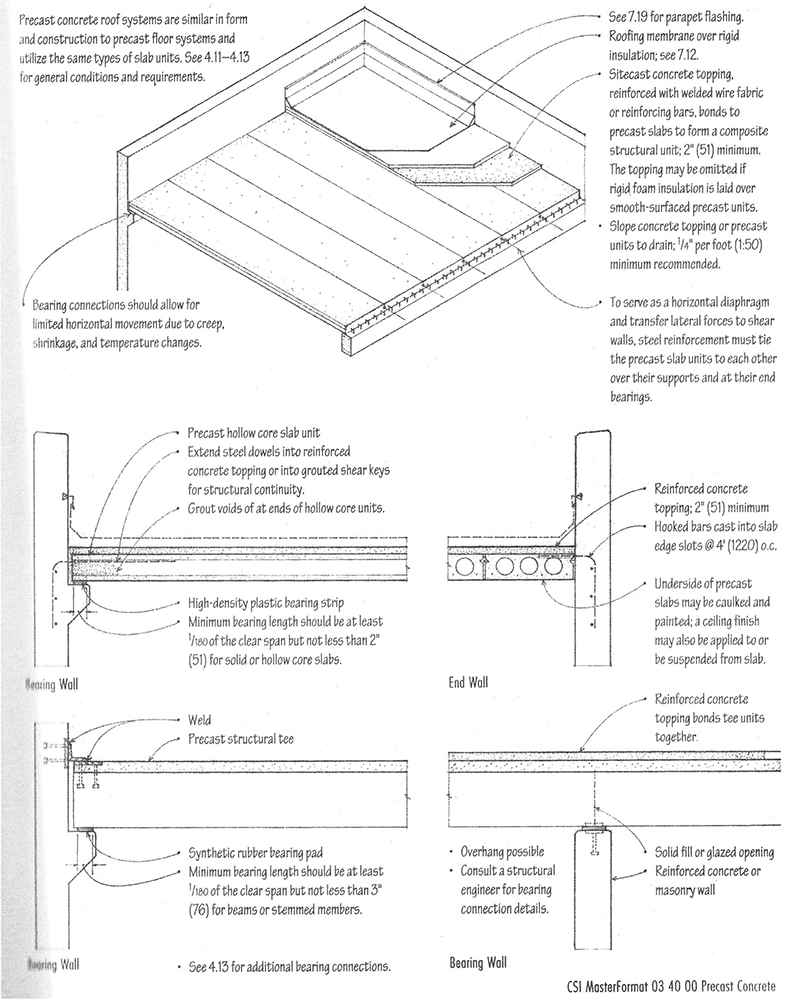
Pre-Cast Concrete Roof Deck
Thermal Insulation: May be installed in any of 3 positions: i. below the structural deck, ii. between the deck and the roof membrane, or iii. above the membrane.
The traditional position for low-slope roofs is above the roof deck and underneath the membrane. Low density rigid boards or lightweight concrete are used.
Insulation above the roof membrane, referred to as a protected membrane roof (PMR) or Inverted Roof Membrane Assembly (IRMA), offers 2 advantages: i. the membrane is protected from heat and cold extremes; and ii. the membrane is on the warm side of the insulation where it is immune to vapor blistering problems. XPS or extruded polystyrene foam insulation boards are most commonly used for this design approach. Since the roof membrane is located on the warm side of the roof insulation, a separate vapor retarder is not required in a PMR.
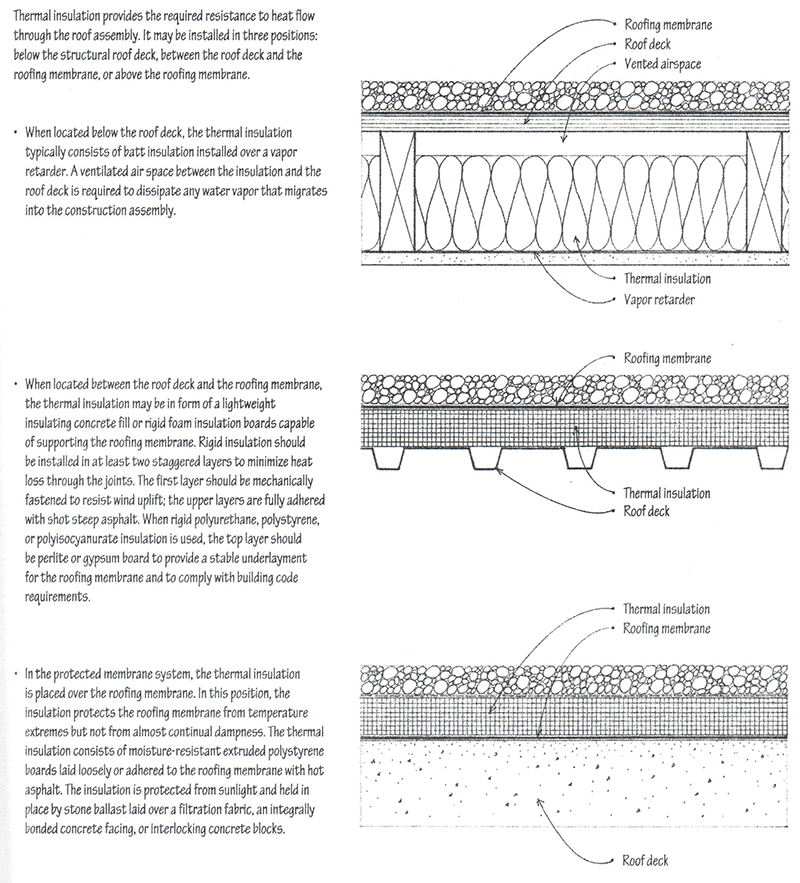
Thermal Insulation
Air Barriers & Vapor Retarders: The traditional material for a vapor retarder consists of 2 layers of asphalt-saturated roofing felt bonded together and adhered to the upper side of the roof deck with hot asphalt. Vapor retarder sheets made from self-adhering bituminous membranes are also common, especially with single-ply roofing systems. A membrane or coating fully adhered to the structural deck is the simplest way to achieve an effective air barrier in a low-slope roof. When a vapor retarder is included in the roof assembly, the air barrier membrane and vapor retarder are frequently the same material. Special attention must be given to the interface between the roof edges and the exterior walls with any type of air barrier as this is the most difficult location to maintain air-barrier continuity and the most frequent location of air leakage.
Types of Flat Roofing Systems:
BUR
Single Ply Membrane
EPDM
TPO & PVC
Modified Bitumen
These roof systems are sometimes referred to as "tar and gravel roofs" (tar is not used as it's a carcinogenic) and asphalt. BUR is one of the most common types of flat roof.
 BUR systems generally are composed of alternating layers of bitumen and reinforcing fabrics that create a finished membrane. The number of plies in a cross section is the number of plies on a roof: The term "four plies" denotes a four ply roof membrane construction. Sometimes, a base sheet, used as the bottom most ply, is mechanically fastened to the roof deck. Built up roofs generally are considered to be fully adhered if applied directly to roof decks or insulation. The reinforcing fabrics also are called roofing felts or ply sheets.
The bitumen typically used in BUR roof systems is asphalt, coal tar or cold-applied adhesive. The asphalt or coal tar is heated in a kettle or tanker and then applied by mop or mechanical spreader. Asphalt is a petroleum product refined from crude oil; coal tar is derived from the distillation of coal. Cold-applied adhesives typically are solvent-based asphalts that don't have to be heated in a kettle or tanker.
The materials used for built up roof systems include aggregate (such as gravel, slag or mineral granules), glass-fibre or mineral surfaced cap sheets, hot asphalt mopped over the entire surface, aluminum coatings or elastomeric coatings. The use of multiple layers of reinforcing plies and asphalt form redundant water proofing layers. The reflectivity of built up roofs depend on the surfacing material used. Gravel is the most common and they are referred to as asphalt and gravel roofs. Asphalt degradation, however, is a growing concern. UV-rays oxidize the surface of the asphalt and produce a chalk-like residue. As plasticizers leach out of the asphalt, asphalt built up roofs become brittle. Cracking and alligatoring follows, allowing water to penetrate the system causing blisters, cracks and leaks. Regular maintenance is required to ensure that a BUR roofing system achieves its life expectancy.

Built-up Roofing
Single-ply membranes are factory-manufactured sheet membranes. They generally are categorized as either thermoset (EDPM) or thermoplastic (TPO or PVC). Thermoplastic materials can be repeatedly softened when heated and hardened when cooled. Thermoset materials solidify, or "set," irreversibly after heating. Single ply membranes commonly are referred to by their chemical acronyms, such as ethylene propylene diene monomer (EPDM).
Single-ply sheet membranes are produced using one of three manufacturing processes: calendering, extruding or spread coating. The membranes may contain reinforcement layers. Common reinforcements for single ply membranes include polyester fabrics or scrims, glass fibre, or a felt or fleece backing.
A finished sheet's thickness typically is referred to as mil thickness. Common mil thickness for these sheet membranes range from 30 mils to 60 mils. Single-ply membranes can be installed fully adhered, mechanically attached or held down with ballast. Most single-ply roof systems do not receive surfacing. In many instances, a combination of attachment methods are used to secure a roof system.
For instance, an insulation may be mechanically attached to the substrate with the roof membrane fully adhered to the insulation.
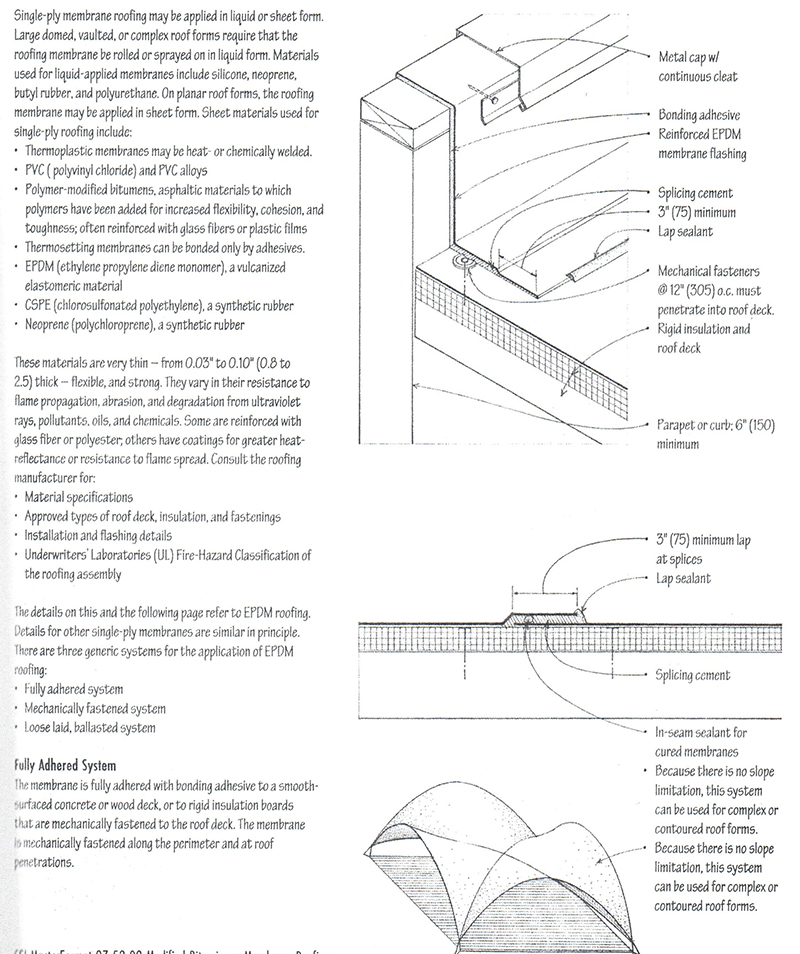
Single-Ply Roofing Systems
Single-Ply Roofing Systems
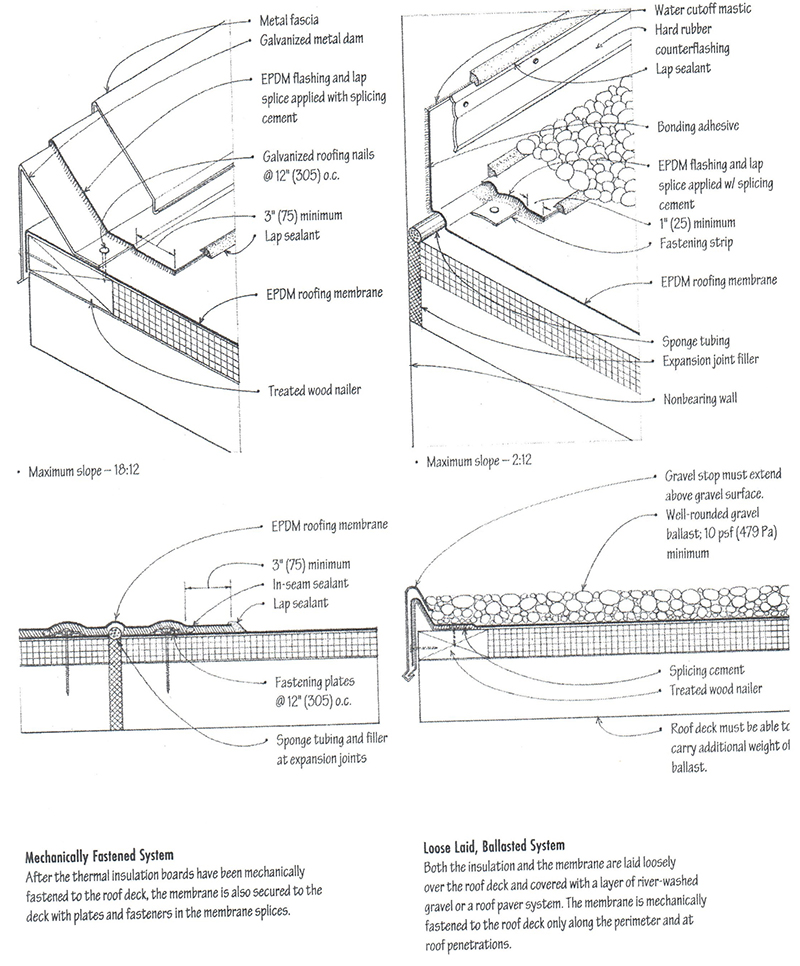
Ethylene Propylene Diene Monomer (EDPM) roofing is an efficient rubber roof style used on low-slope roofing surfaces. It is a synthetic rubber most commonly used in single-ply roofing because it is readily available and relatively simple to apply. It is also called Single Ply Membrane and it is one of the common types of low-slope roofing. It's been in use on roofs in the Canada since the 1960’s. When properly applied, it has a life cycle of 15 to 25 years. It is great for preventing leaks and is often installed for roofs that have problems with weathering, failing joints, and inflexibility. It is relatively inexpensive as well as simple to install as compared to BUR. Compared to conventional built-up roofs, it is also much cleaner and doesn’t emit the odors and fumes that are often associated with built up roofing systems. Vulcanized EPDM is the most common type of EPDM roofing system. Non-vulcanized EPDM is typically used for flashing purposes.
There are three methods of applying EPDM:
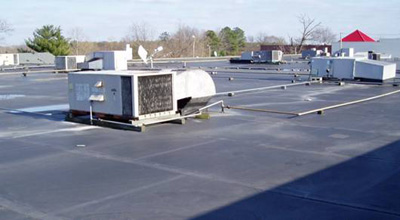
Fully adhered EPDM uses water-based or solvent-based adhesives to adhere the EPDM rubber to the substrate.
Mechanically fastened EPDM is attached to the substrate by manufacturer-approved mechanical methodology.
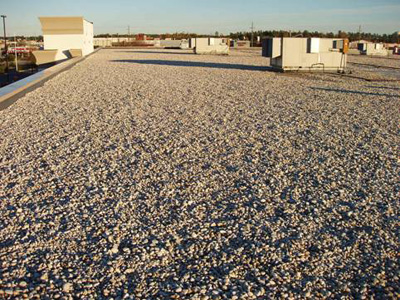
Loose-laid membranes are secured only at the perimeters and any penetrations. A ballast of round river rock or concrete pavers is used to hold the materials in place. The river rock is usually installed at a rate of 1000 - 1200 pounds per square (100 square feet of roofing surface) and the pavers typically weigh 20-pounds per square foot. Structural integrity is of paramount importance with a loose-laid roof system. The seams are sealed using either an adhesive or a splicing tape.
EPDM Benefits:
Highly dependable, economically beneficial, high durability, and high efficiency makes EPDM an attractive option to any building owner looking to a commercial, industrial and institutional roofing contractor for a new roof or an upgrade to the existing roofing system. Additionally, an EPDM roof will often come with long warranty, low maintenance requirements, low installation labor costs, and generally garner rather easy code approvals. For regions subject to potentially catastrophic weather experiences, such as hurricanes - EPDM roofs have very high resistance, making them quite practical for those who live in those areas.
Advantages of EPDM
EPDM roofs are highly resistant to weathering, ozone, and surface damage. It is flexible in cold weather and still has high fire and heat resistance. EPDM is well suited for low-slope roofs and flat roofs that need to be waterproof and durable against the harsh Canadian weather.
Another example of a Single-Ply Membrane is the thermoplastic TPO or PVC roofing system. These membranes can be repeatedly softened by heating or hardened when cooled. Because of the materials' chemical nature, thermoplastic membranes typically are seamed by heat welding with hot air or solvent welding.
The most common thermoplastic roof membranes are PVC and TPO. The following provides general descriptions of these two systems:
Thermoplastic Olefin (TPO)
TPO membranes are produced by calendering with lamination, extrusion with lamination, or extrusion-coating techniques. TPO sheets are a blend of polypropylene and ethylene propylene polymers and usually are reinforced with polyester. TPO sheets contain colorant, flame retardants, UV absorbers and other proprietary substances to achieve desired physical properties.
- Sheet widths range from 6 feet to 12 feet wide
- Sheets are typically 40 mils to 100 mils thick
- Seams are sealed by heat welded with hot air
- TPO membranes Commonly are white or black
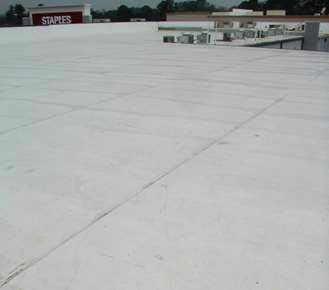 PVC sheets are produced by calendering, spread coating or extruding, and typically are reinforced with polyester or glass-fibre mats or scrim. PVC sheets contain plasticizers and stabilizers, as well as other additives to impart flexibility and achieve other desired physical properties. Some membranes are available with nonwoven fleece backing adhered to the underside of a sheet.
Sheet widths range from 6 feet to 12 feet wide.
Sheets are typically 45 mils to 90 mils thick.
Seams are sealed by heat or chemical welding.
PVC membranes are produced in numerous colors, though gray and white are the most common.
Polymer-modified roof membranes are composed of reinforcing fabrics that serve as carriers for the hot polymer-modified bitumen as it is manufactured into a roll material. MB roof system membranes are composed of multiple layers, much like BUR membranes. MB roof systems typically are installed as a two-ply system and almost always are fully adhered.
There are two types of MB roofing membranes:
SBS polymer-modified bitumen membranes commonly are installed in hot moppings of asphalt (similar to BUR systems) or cold adhesive. Some SBS modified membranes are self-adhering; that is, they contain an adhesive backing.
APP polymer-modified bitumen membranes typically are heat-welded or torch-applied.
Generally, APP modifiers impart a "plasticized" quality to asphalt, and SBS modifiers impart a "rubberized" quality to asphalt. MB membranes and EPDM a thermoset membrane, often are confused by consumers because of colloquialisms used by roofing contractors. MB and EPDM membranes are sometimes called "rubber roofs."
Modified Bitumen Surfaces:
Surfacing for MB membranes include aggregate surfacing, mineral surfacing, metal foil-laminate surfacing and smooth liquid-applied surfacing.
Steep or sloped roofs refer to those with a slope of 3:12 or greater. Most commonly used roof finish products on commercial industrial buildings are flat corrugated metal roofing and sheet metal roofing panels, as well as curved metal panels. Design considerations when selecting a metal roof finish include whether the fasteners will be exposed or concealed - seam type, profile, color, and snow and ice shedding prevention.
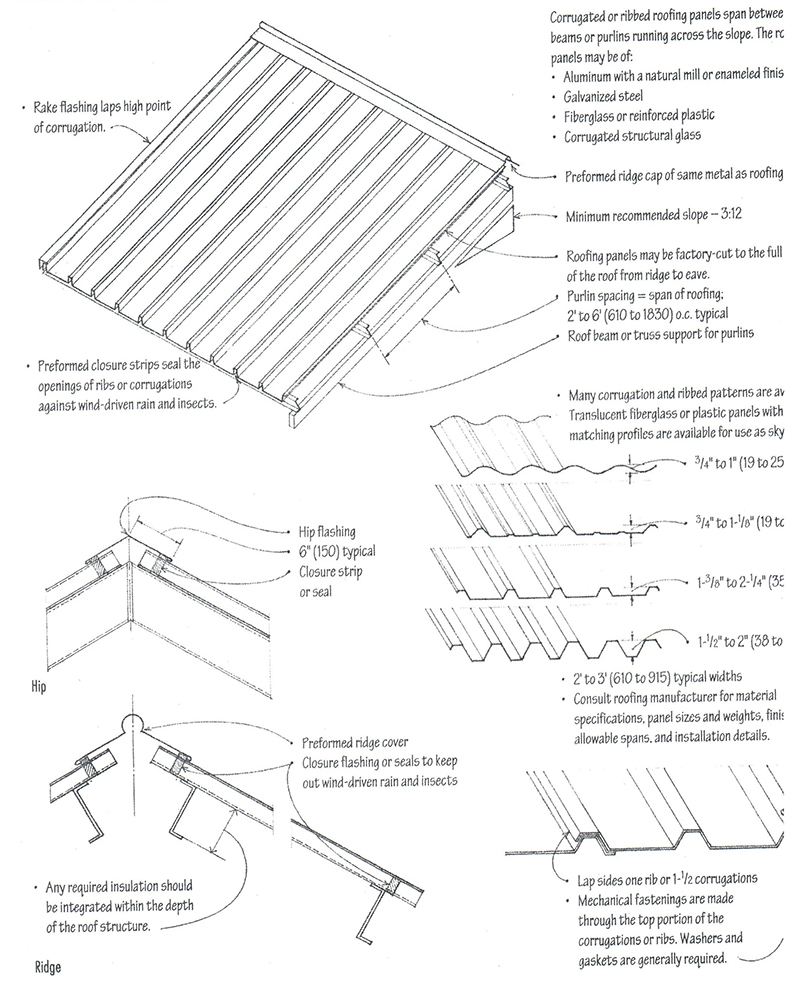
Corrugated Metal Roofing
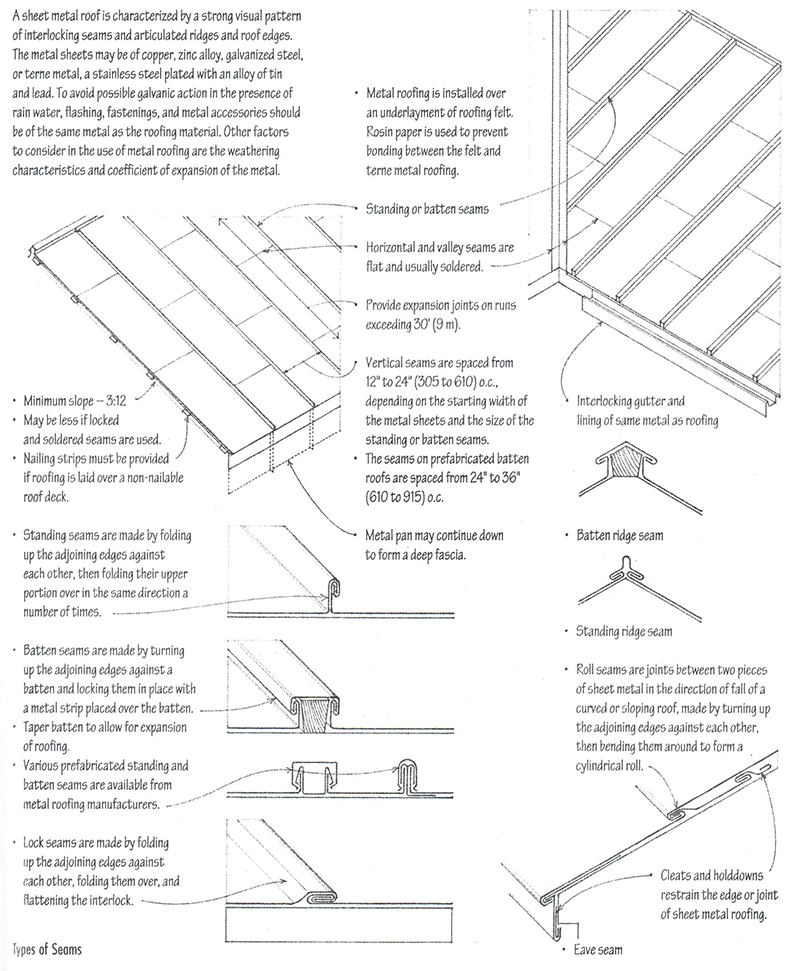
Sheet Metal Roofing
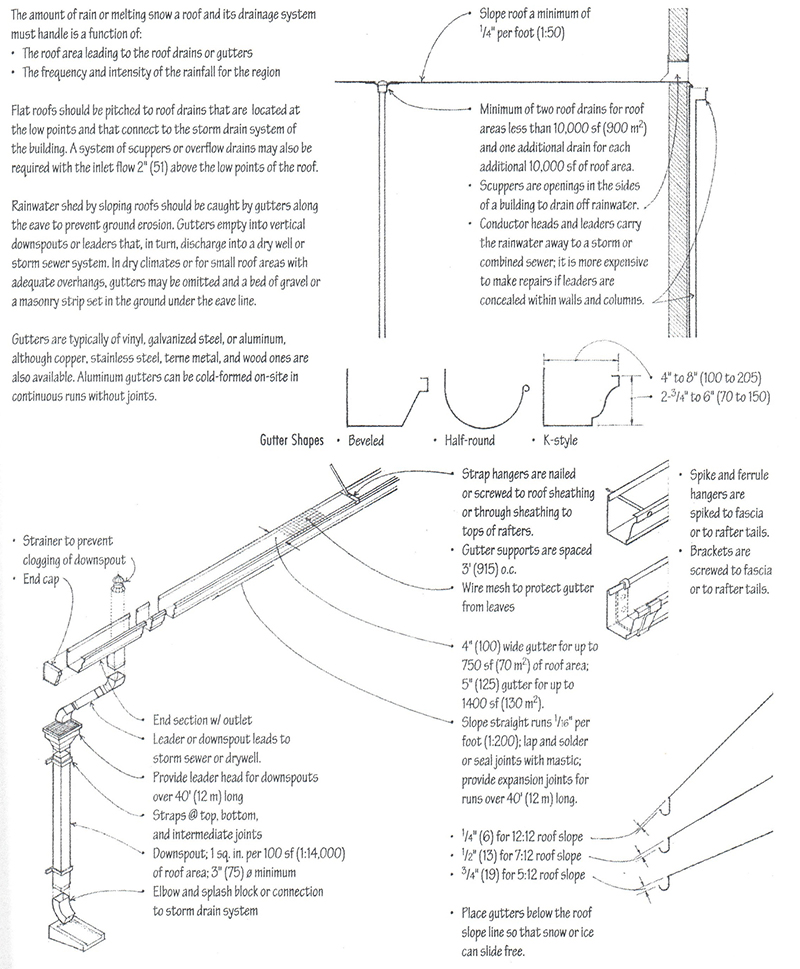
Roof Drain Options for Low-Slope & Steep Roofs
Green roofs, also known as vegetated roofing, have begun to appeal to homeowners, businesses and even cities as an attractive way to promote environmentalism while solving the problems of conventional roofs. Green roofs supplement traditional vegetation without disrupting urban infrastructure -- they take a neglected space and make it useful.
Green roofs last longer than conventional roofs, reduce energy costs with natural insulation, create peaceful retreats for people and animals, and absorb storm water, potentially lessening the need for complex and expensive drainage systems. On a wider scale, green roofs improve air quality and help reduce the Urban Heat Island Effect, a condition in which city and suburban developments absorb and trap heat. Anyone who has walked across a scalding parking lot on a hot, summer day has felt one effect of an Urban Heat Island.
The layers of a green roof must, like any roof, accommodate drainage and protect the building from the elements with a waterproof membrane. But they also must create a growing area and potentially provide support, irrigation and root protection barriers while staying as light as possible.
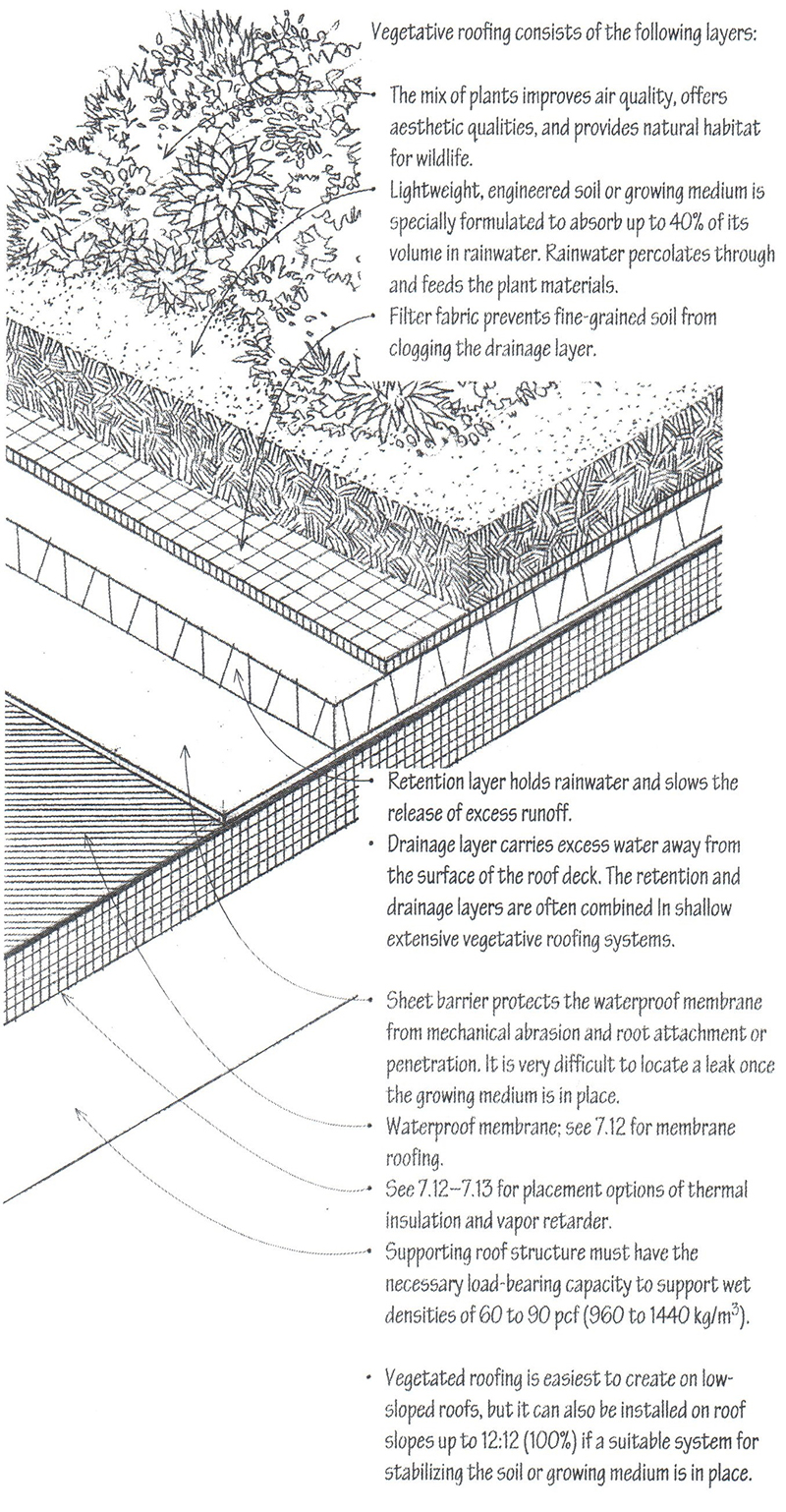
Green or Vegetated Roofing Components (Typical non-proprietary)
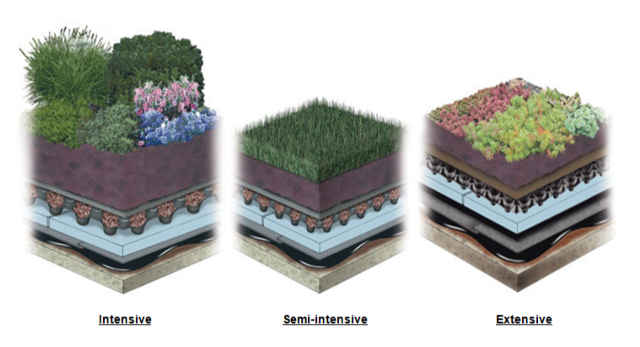
2 types of green roof exist: Intensive and Extensive:
Intensive green roofs are essentially elevated parks. They can sustain shrubs, trees, walkways and benches with their complex structural support, irrigation, drainage and root protection layers. The foot or more of growing medium needed for an intensive green roof creates a load of 80-150 pounds (36-68 kilograms) per square foot.
Extensive green roofs are relatively light at 15-50 pounds (7-23 kilograms) per square foot. They support hearty native ground cover that requires little maintenance. Extensive green roofs usually exist solely for their environmental benefits and don't function as accessible rooftop gardens.

Extensive Green Roof on Metal Deck (Source: Tremco)
Green roofs require professional design, careful structural analysis and multiple layers and systems, even extensive green roofs usually start at $8 per square foot, significantly more expensive than the $1.25 per square foot for built-up roofs (BURs) [Source: EPA].
In the meantime, long-term economic benefits already outweigh the start-up costs. Because green roofs protect the roof membrane from harsh weather and ultraviolet (UV) radiation, they can last twice as long traditional roofs. Green roofs also have a fairly stable surface temperature, remaining at air temperature or cooler while traditional rooftops can soar up to 90º F (32º C) above air temperature [Source: EPA]. The extra growing medium and vegetation insulates the building from intense temperatures and minimizes heat gain. According to a Canadian study, even a six-inch extensive green roof can reduce summer energy demands by 75 percent [Source: Professional Roofing].
These benefits are encouraging eco-minded homeowners, businesses and cities to build green rooftops. Green roofs mitigate water runoff and sewer overflows. Vegetation and soil act as a sponge, absorbing and filtering water that would normally plunge down gutters, wash through polluted streets and over-tax sewer systems. A green roof's plants remove air particulates, produce oxygen and provide shade. They use heat energy during evapotranspiration, a natural process that cools the air as water evaporates from plant leaves.
Evapotranspiration and the shading provided by plants help counter the Urban Heat Island Effect brought about by an excess of reflective and impermeable surfaces in cities and suburbs. Because Urban Heat Islands increase temperatures in urban and suburban areas, they amplify the demand for air conditioning and launch a cycle of energy consumption that contributes to global warming. If green roofs become a common building initiative, cities can reduce the uncomfortable effects of Urban Heat Islands.
Green roofs replace a hard infrastructure with one that's not only more efficient, but also beautiful and useful. Green rooftops offer office workers a rooftop retreat and apartment residents a place to plant gardens or relax. Even non-accessible green roofs create stunning aerial views for surrounding neighbors and provide wildlife with a secluded, safe space.
Sources:
Allen, Edward, and Joseph Iano. Fundamentals of Building Construction Materials and Methods. 6th ed. Hoboken: John Wiley & Sons, 2014. Print.
Ching, Frank,. Building Construction Illustrated. 4th ed. Hoboken, NJ: Wiley-Blackwell, 2008. Print.
"Flat Roofing Systems." Conestoga Roofing - Industrial & Commercial Flat Roofing. N.p., n.d. Web. 23 Nov. 2013.
"What Is a Green Roof?" How Stuff Works. N.p., n.d. Web. 23 Nov. 2013.
Additional Information:
Canadian Roofing Contractors Association: http://www.roofingcanada.com/main.html
National Roofing Contractors Association: http://www.nrca.net/
Canadian Sheet Steel Building Institute: http://www.cssbi.ca/products/commercial/roof-assemblies
Roof Component Suppliers:
Firestone: http://firestonebpco.com/roofing/
GAF: http://www.gaf.com/Roofing/Commercial/Products
Johns Manville: http://www.specjm.com/commercial/roofing.asp
Dow Building Solutions - PMR Rigid XPS Insulation: http://building.dow.com/na/en/products/insulation/roofmate.htm
Owens Corning XPS Roof Insulation: http://www2.owenscorning.com/literature/pdfs/[02]%20FOAMULAR%20XPS%20Roof%20Insulation%20for%20Commercial%20Buildings.pdf
Sika Sarnafil Roof Insulation Products: http://usa.sarnafil.sika.com/en/solutions_products/10/10sa03/10sa03ssa01100/10sa03ssa01102.html
PolyIso (Polyisocyanurate) Roofing Insulation: http://www.genflex.com/products/polyiso
Georgia Pacific DensDeck Roof Board: http://www.buildgp.com/roofboard_densdeck
Vicwest Commercial Roofing: http://vicwest.com/commercial/products/steel-roofing
Green - Vegetative Roof Component Suppliers:
Tremco Vegetated Roofing Solutions: http://tremcoroofing.com/greenroofing.asp
Henry Vegetative Roofing Assembly: http://henry.com/vegetative
Sika Sarnafil Green Roof: http://usa.sarnafil.sika.com/en/group/roofing-sustainability/sustainable-product-solutions/vegetated-green-roofs.html
Firestone Vegetative Roof System: http://firestonebpco.com/roofing/green-roofing-products/skyscape-vegetative-roof-system/
Dow: Vegetative Roof PMR – A Design Primer: http://msdssearch.dow.com/PublishedLiteratureDOWCOM/dh_08dd/0901b803808dd44b.pdf?filepath=styrofoam/pdfs/noreg/179-05268.pdf&fromPage=GetDoc
Roof Fire Classifications:
Class 1 & Class A Rated Roofs in Canada: http://c.ymcdn.com/sites/www.polyiso.org/resource/resmgr/technical_bulletins/tb111c_jun30.pdf